


Sermon on the Sixth Sunday of Pascha (May 17, 2026)
In the Name of the Father and the Son and the Holy Spirit, one God. Amen.
Christ is risen!
When God formed man, He took the dust from the ground. And then God breathed the Spirit of Life, His own Spirit into man, to enliven him. And “the man became a living creature” (Genesis 2:7).
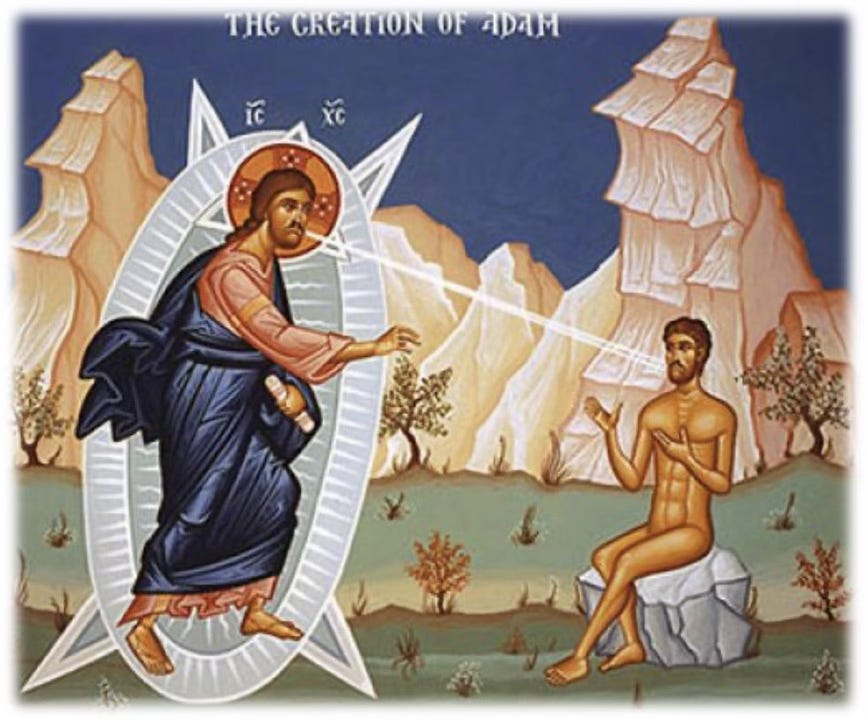
It is a fundamental belief and fact that we were created by God. And not just created, but created out of the dust of the ground, meaning, out of the mud or clay. Think of a potter fashioning various items out of clay; we are that clay in God’s hands.

It didn’t take long for man to disobey God and find himself, and the rest of creation, outside of Paradise looking in. Out of that disobedience Death entered into the world. Humanity became mortal, enslaved to Death. And through Death sin crept in and put its nasty tentacles around us and began to control our desires, perverting us.
Sin deformed humanity. People became spiritually and physically sick. Some would be born with ailments, others would become terminally ill, everyone would be affected by various bacteria and viruses, and all eventually die.
People sometimes spend time, or rather, waste time debating whose fault it is. Who do we blame for all the suffering and pain and death in the world? And they often end up blaming God. He could prevent it all, and yet He doesn’t. Therefore, that’s His fault!
But, what have I done to stop all the pain and suffering and misery and death around me? Have I acquired the Spirit of peace to save a thousand souls around me? Have I stopped the hate and anger and sin in my heart? Can I dare to blame anyone else, if I myself have done nothing to help, but only worsen the situation through my sin?
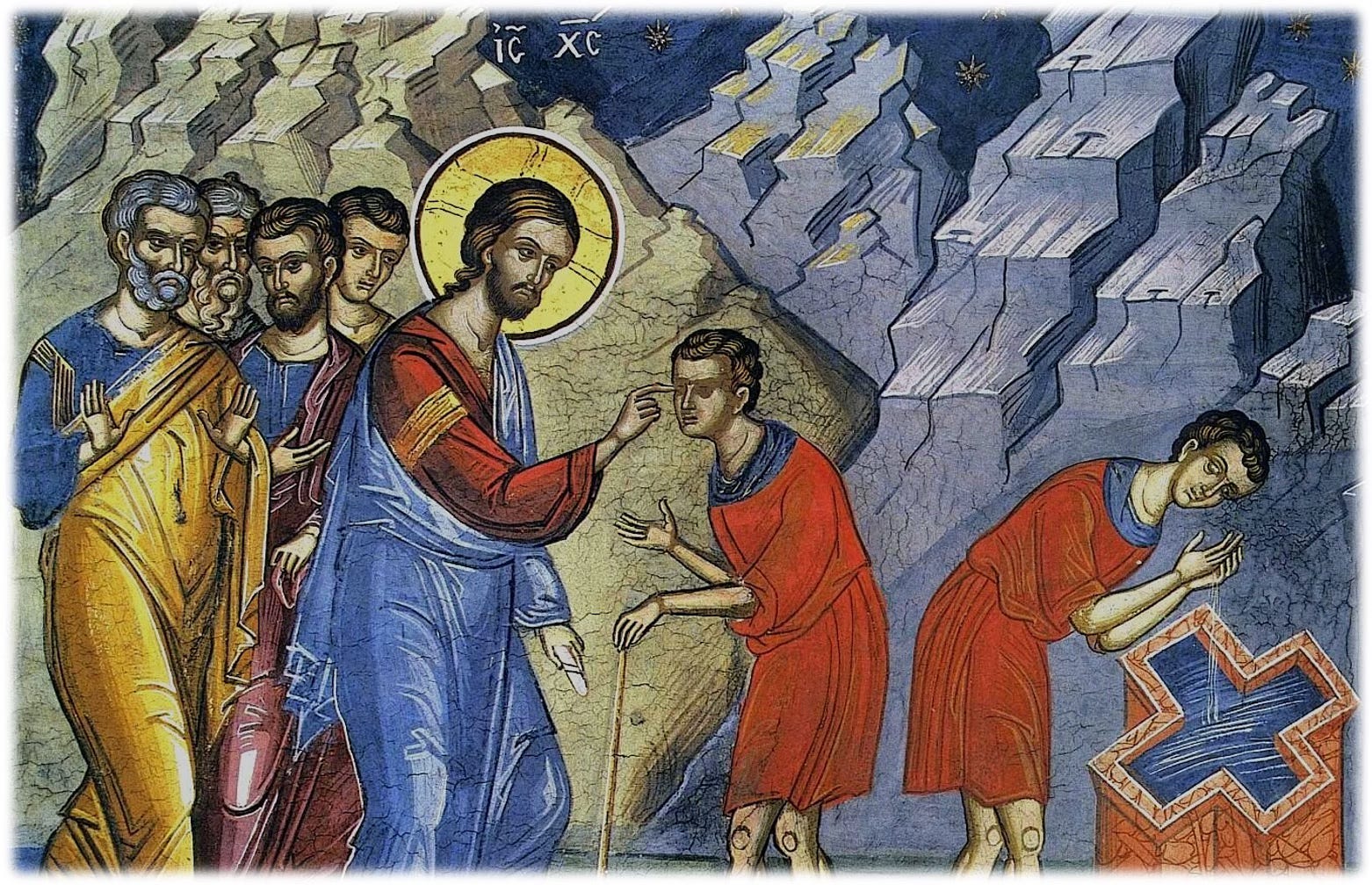
“As Jesus was passing by,” we heard from today’s Gospel lesson, “He saw a man blind from birth. And His disciples asked Him, ‘Rabbi, who sinned, this man or his parents, that he was born blind?’” (John 9:1-2)
Who do we blame for his condition? Who is guilty? Would finding the guilty party put everything aright, though? When’s the last time someone was healed just because we determined the origin of the sickness? Healing happens only when the right medication is taken or procedure is performed.
The Lord does not really answer the disciples’ question. We do not know who we can blame for the man being born blind. All we know it’s neither his sin nor his parents’. But Jesus does say, “He was born blind so that God’s works might be revealed in him” (John 9:3).
Let’s be honest, that answer is kind of unsatisfactory. Does Christ mean that the man was blind all his life just for Christ to reveal God’s works in him?
He was born with an affliction, a distortion, because of the infection of sin in general. All of humanity is corrupted by sin, and this virus affects our being at all stages of our existence.
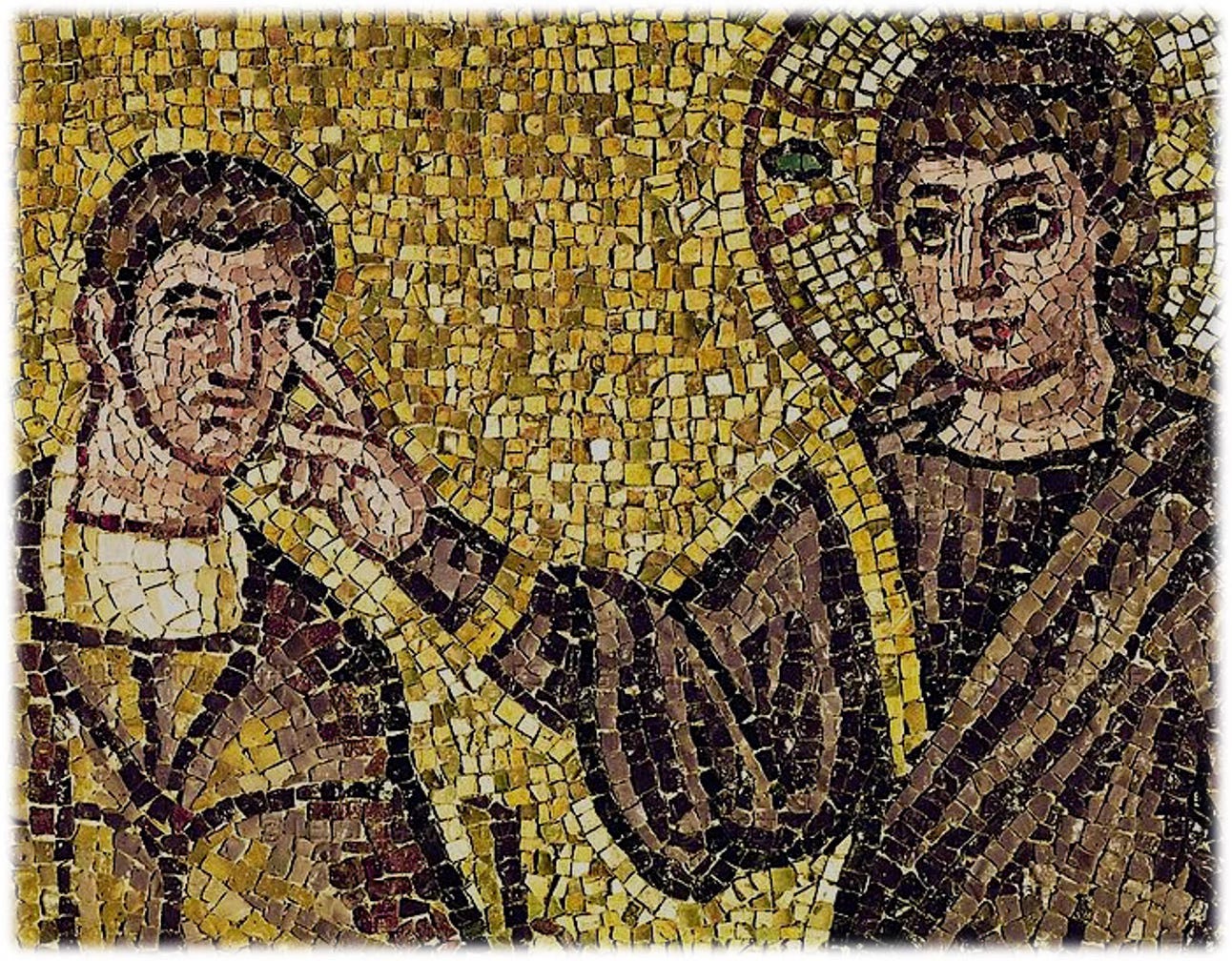
Saint Irenaeus of Lyons, however, gives us a definition of God’s works. It is, he says, the forming of man. That’s what Jesus means by the works of God here – the formation of human beings. And that’s exactly what Jesus does to the man – He forms his eyes. He spat on the ground and made mud with the saliva and spread it on the man’s eyes. (John 9:6)
The man was not merely blind, he had no eyes at all. Jesus did not simply put the mud on his face, He put the mud into the empty eye sockets and created eyes for the man.
Jesus did not command the man, “Be healed and see,” because when He created man in the beginning, He did not use words, but got His hands dirty with mud. God didn’t speak man into existence, He formed him from mud, with His own hands. Since God’s work is the formation of man, Christ completes the formation of this man by giving him eyes.
The healing of the blind man, the completion of his creation, is part of the bigger plan of God. Saint Paul mentions a new creation (2 Corinthians 5:17, Colossians 3:10) in some of his epistles. This new creation has its identity in Christ, after He has fashioned or refashioned it.
The Son of God did not become incarnate to figure out who to blame for our present situation. God became man in order to heal us and to teach us how to become part of His new creation.
Jesus seeks out people to heal them because it wasn’t us who loved Him, but He loved us first (1 John 4:10). He saw the man blind from birth… He saw the paralyzed man… He saw Philip and called him… He saw Nathanael under the fig tree before Philip came to him… God does not wait for us to reach out to Him (because He would be waiting forever), but He seeks us out to bring us to Himself.
And if we pay attention to the healings that the Evangelists chose to write about in detail, we’ll see something interesting. On more than a few occasions, it is mentioned that a crowd came to Jesus and He taught them and healed them all. But we are given just a few accounts with specific healings. All these accounts describe Jesus refashioning humanity, making that new creation that Saint Paul spoke about.
The man was born without eyes, and Christ gave him eyes to see the Light of the world. Another man was paralyzed for 38 years, and Christ made him walk, so that he would glorify God in the Temple (the first place he went to after being healed).
Lazarus died and was buried for four days, and Christ raised him to foreshadow our resurrection. And so that we would know that Jesus is “the resurrection and the life. Whoever believes in [Him], though they die, yet they will live. And everyone who lives and believes in [Christ] will never die” (John 11:25-26).
Not to mention all the exorcisms that Christ performed to show that we are no longer under the dominion of demons. And then He gave His disciples the power and authority over all the demons (Matthew 10:1, Mark 13:15, Luke 9:1).
And then on the Cross the Lord uttered the famous words, “It is finished” (John 19:30). What exactly was finished? The creation of humanity was finished on the Cross. If sin distorted our nature, then we can say that God refashioned it on the Cross. Through the Cross, sin, and then death, ceased being part of our existence.
Sin is no longer a fact of our life; it is a choice now. If we sin, it’s because we choose to do it. And even then, the Lord offers us remedies; He does not abandon us in our current sinfulness. Through His Church, He offers us sacraments of healing our wounds and reconciliation with God.
And even though death is still very much part of our life, it is no longer the end. Death is no longer a tyrant that awaits us when we slip away from this life. Rather, Christ transformed death into a step – a step we take in our journey of life. A life, which, when lived in obedience and faithfulness to Christ, continues without end in the presence and with our Creator.
When one of the Pharisees by the name of Nicodemus, who would later help Joseph of Arimathea to take down Jesus’ body from the Cross, came to see Jesus, the Lord told him, “Unless one is born again he cannot see the Kingdom of God” (John 3:3).
These words really confused Nicodemus, and he asked, “You mean, like, I have to enter my mother’s womb again?” But Jesus reassured a distressed Nicodemus, “Unless one is born of water and the Spirit, he cannot enter the Kingdom of God” (John 3:5).
Being born again of water and the Spirit – baptism – is how we become part of God’s new creation, of refashioned humanity. We need to be born again of water and the Spirit, to be washed, to be reformed because of the sin into which humanity had fallen. And Christ provides both the physical reformation and the regeneration that comes through the baptism.
Once we are born again, once we are baptized, once we become part of the new creation, we then must become obedient to God’s Word, otherwise there will be no healing. “Go, and wash in the pool of Siloam” (John 9:7); “Get up, take your bed, and walk” (John 5:8); “Lazarus, come out” (John 11:43).
The healing and the life of these people depended on them obeying those commands. As crazy as those commands sounded – how can a blind man find his way anywhere, especially to the pool of Siloam? Or a paralyzed man get up? Or a dead man come out? God acts in our life, but true healing and miracle – our refashioning as the new creation – happen with our faithfulness and obedience to what He tells us to do, even if it does not always make sense.
If we submit ourselves in obedience to Christ, nothing in us will remain the same. We will change, we will be refashioned by Him. Some things will and must disappear, we must change.
The clay in the potter’s hand has to be flexible to allow him to shape it. We are the clay in God’s hands. And Saint Paul tells us, “Put away anger, wrath, malice, slander, and obscene talk from your mouth” (Colossians 3:8). In other words – change! Because in new creation, as the hands of God refashion us, we are to put on “compassionate hearts, kindness, humility, meekness, and patience, bearing with one another… and forgiving each other” (Colossians 3:12-13).
Before His Passion and Crucifixion and Resurrection, after He had washed His disciples’ feet, the Lord gave them a new commandment, the commandment for the new creation “that you love one another: just as I have loved you, you also are to love one another. By this all people will know that you are My disciples” (John 13:34-35). By this you will know that you are part of God’s new creation.
Christ didn’t come looking for the guilty party (because, let’s be honest, we are the guilty ones), but He refashioned us, completed our creation, gave us a chance to be born again to enter the Kingdom of God, a chance at a new life, a life in Him and with Him, in obedience and faithfulness to His commandments.
And He also gave us the freedom to choose – choose life or choose death; choose new creation or choose the decay of the sinful existence; choose the change of being refashioned or choose the stagnation of the old life; choose to be born again or choose to die in sin.
There isn’t much of a choice, if you think about it…
So that we would always glorify One God in three Persons: Father, Son, and Holy Spirit, now and ever and unto ages of ages.
Amen.
Christ is risen!
Find us on Spotify.


