



Sunday sermon on the First Sunday of Great Lent (March 1, 2026)
In the Name of the Father and the Son and the Holy Spirit, one God. Amen.
“Then God said, ‘Let Us make man in Our icon, after Our likeness’… So God created man in His own icon” (Genesis 1:26-27). Images and icons have been central to God’s creation from day one…or, day six, to be more exact. Human beings were created in the image of God, in His own icon. (Icon is just a Greek word for image.)
An icon always points beyond itself, to the prototype. So a human being made in God’s image is like God, but God is not like a human being. There is an overlap between the two, but the divine Prototype is not just a larger or more powerful version of humans. Rather, God is the source of everything that we are.
And Who is God’s image, the Prototype after which we were created?
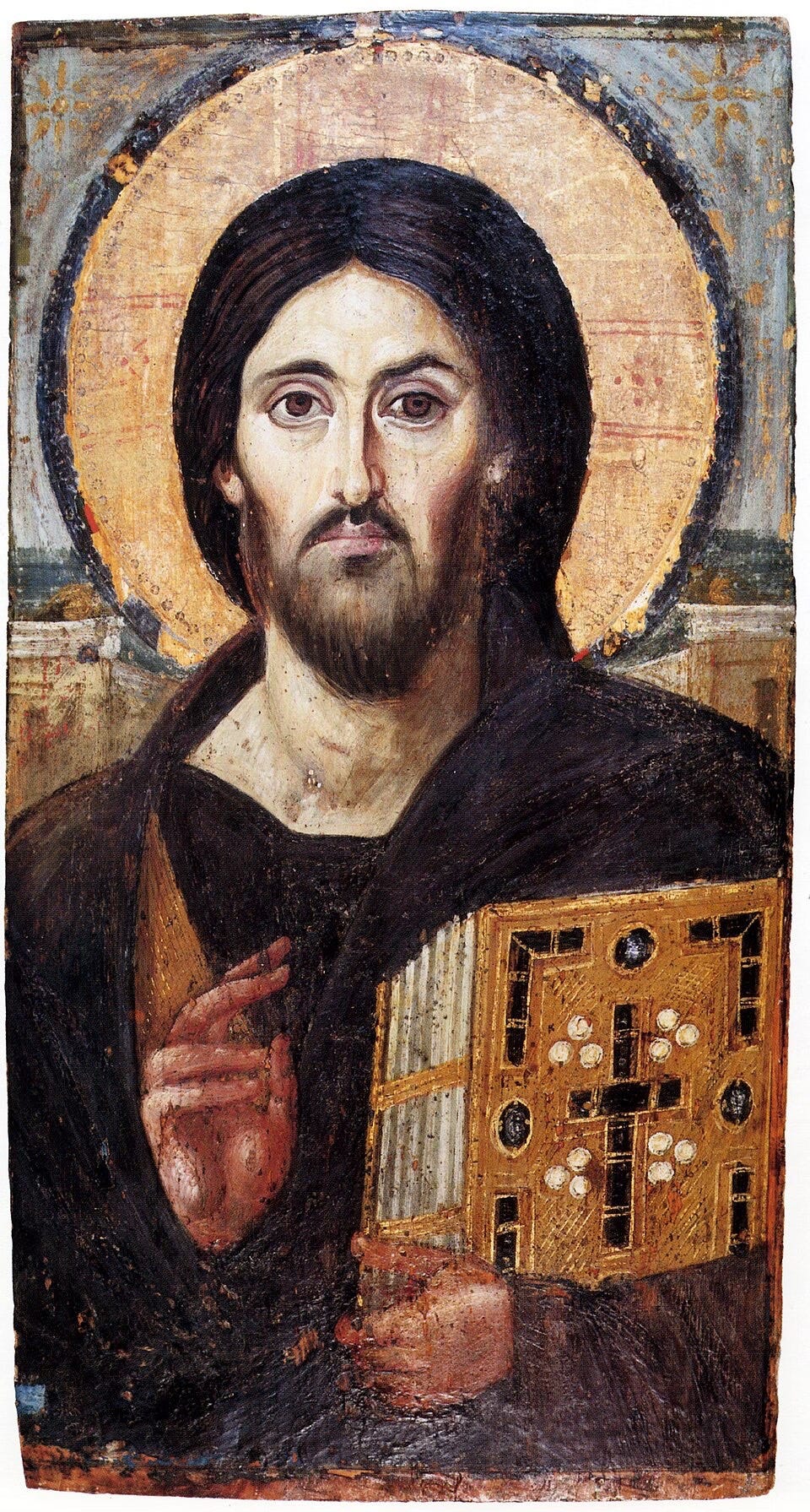
Jesus Christ, the Second Person of the Holy Trinity, the Son of God. We are His icons from the beginning. And later, “when the fullness of time had come” (Galatians 4:4), the Son of God became the Son of Man, born of a woman, the Virgin Mary.
Through this birth He took upon Himself our nature, without ceasing to be God. Through this birth God still did not become like a human being, rather He brought humanity back to being like God. Through this birth He mingled His Body and Blood – which is also our body and blood – with His divinity. Through this birth we were also enabled to portray God in images.
In other words, we could make paintings of God. If we can depict God in icons, then we can depict His icons in images as well – the saints who aligned their lives according to God’s will and tried to resemble the Prototype, as best as they could, through His grace and mercy.
The saints are our heroes, examples worthy of imitation, and cloud of witnesses (Hebrews 12:1) that intercede on our behalf. When we approach the icons of the saints, we do not approach paint and wood and metal and other materials used to make those paintings; we approach to venerate the prototype that was depicted using those materials. We look at an image to look beyond it. Even an icon of a saint points beyond the saint.
This veneration of icons became a controversy in the 8th century. The problem went much deeper than just can we adorn our churches and our homes with icons, and should we kiss them? The issue was – did the Son of God really become incarnate, was He born of a woman, did He take upon Himself our human nature?
These were crucial questions because if Jesus wasn’t the incarnate Son of God, then He wasn’t the Prototype after which we were made. And if He wasn’t, then His life was not the most perfect example of what it truly means to be a human being.
Iconoclasm ravaged the Church for more than a hundred years. Christians were accused of worshipping icons, not just the saints portrayed on them, but the material they were made of. Even civil authorities blamed their own incompetence at governing the empire on this supposed idolatry.
Every time controversies rocked the Church, the bishops would get together to give a precise teaching on what was a long-established practice. Such was the case with icons.
The Church had to affirm that we do not mistake the image for the prototype. We are material beings, flesh and bone, made of dust from the ground (Genesis 2:7), as well as spiritual beings because God’s Spirit was breathed into us to make us living creatures (Genesis 2:7). We are creatures of symbols. A symbol is something that points beyond itself and is the meeting place of two realities.
As material and spiritual beings, we need material images to cross to the beyond. So, we do not venerate material icon, but the person who is depicted on it. Yes, we kiss the wood, the glass, the paint, but we extend our adoration to the saint, and through the saint to the Prototype, the Son of God.
And the Church also upheld that there are two kinds of adoration – one that is due to God alone, we call it worship; and one due all His saints, called veneration. We do not confuse the two. We worship God alone through prayer, singing, reading, hearing, painting, and even kissing icons. And we venerate the saints through similar means. But we do not confuse the two.
Our worship and veneration ultimately goes beyond the material to the prototype.
The most significant issue at hand with iconoclasm was the Incarnation. Those who denied icon veneration, denied that the Son of God became man, lived among us, taught and healed and served, was betrayed, beaten, humiliated, crucified, resurrected on the third day, and ascended into heaven to seat our human nature at the right hand of the Father, so that humanity could receive the Holy Spirit.
If the Messiah was not the incarnate Second Person of the Holy Trinity, then nothing matters. But the apostles and other disciples witnessed all of it. That is what they preached. That is the message that took the whole empire by storm. That is what Christians have been willing to die for.
In this reaffirmation of the divinity of Jesus Christ, the Church defended the use of icons and the depiction of the Son of God on them because, again, we look at the image to look beyond it. We need material things to see the spiritual reality. In this way icons are symbolical because they are the meeting place of two realities – material and spiritual, earthly and heavenly.
As the living icons of God, each of us is also the symbol of the same reality – material and spiritual, earthly and heavenly; dust and breath, body and Spirit. We are like God, yet not gods. Each icon calls us beyond itself. Each of us points to the Prototype, our Lord Jesus Christ.
If we are icons of the same Christ, then our life should point others to Him, to the Prototype. If we are icons of Christ, then we have no right to deface, humiliate, abuse, or destroy these living icons.
If we are unable to see Christ in others, it’s mostly because of our own blindness. Yes, there are those who have marred their icon so badly that it is unrecognizable. But even for them Christ became man, died, and rose again.
We do not live in an openly iconoclastic times, but the living icons of God are daily disfigured, degraded, and exploited. And this happens through our own participation.

The little demons in our pockets allow us to anonymously and virtually abuse others and ourselves through porn, social media humiliation, the ever-polarizing news coverage, which leads to anger and judgment of “the other” side.
This is today’s iconoclasm. All these things end up with us denying God’s image in another person. And our task, as Christians, as the Church of Christ, is to recover the icon in humanity, starting with my own icon, so that it would again point beyond itself to the Prototype.
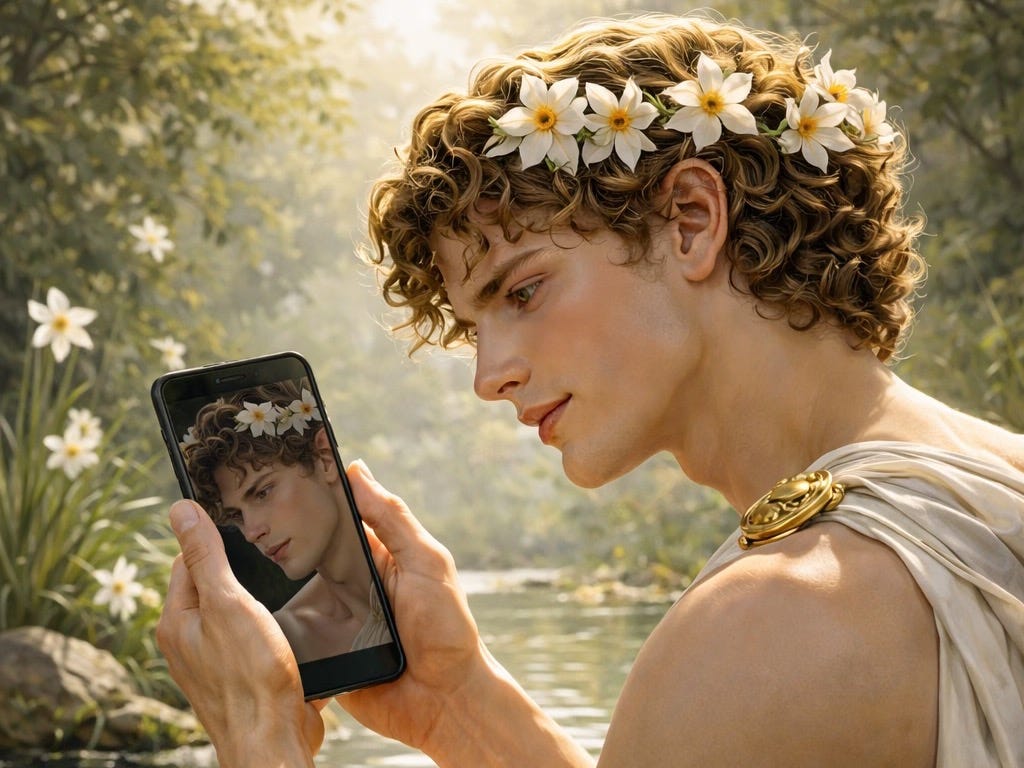
Icons have been central to God’s creation from the beginning. When they lost their first-created beauty, the Prototype Himself came down to restore His icons to their original purpose – glorification, participation in His divine life.
Lent is given to us for, among other things, to recognize Christ and His saints in paint and wood, and in every human face. In this way the journey to Pascha becomes a return to the Prototype, where the image within is healed and made radiant again by grace. And standing before the light of the Resurrection, the recovered icon of our humanity reveals the glory for which it was created, pointing beyond itself to its Creator.
To the Jesus Christ, the Son of God, in Whose icon we are created, together with His Father and the Holy Spirit, we give all glory, honor, and worship, always, now and ever and unto ages of ages.
Amen.
This sermon was inspired by Aidan Hart’s article “Image and Awe.”
Find us on Spotify.
Intro and outro melody:
Rule of Life
Music from #Uppbeat (free for Creators!):
https://uppbeat.io/t/brock-hewitt-stories-in-sound/rule-of-life
License code: MOHT7GAHFYHX7I1Y


